Use this free crochet terms converter when a pattern uses a different stitch-naming system from the one you know. Choose US to UK or UK to US, select a common stitch and read the matching name. This is a terminology reference: it changes the name you read, not the stitch you make.
Mehroosh Crochet Co · Free crochet tools
Compare common US and UK stitch names and abbreviations.
Reference chart
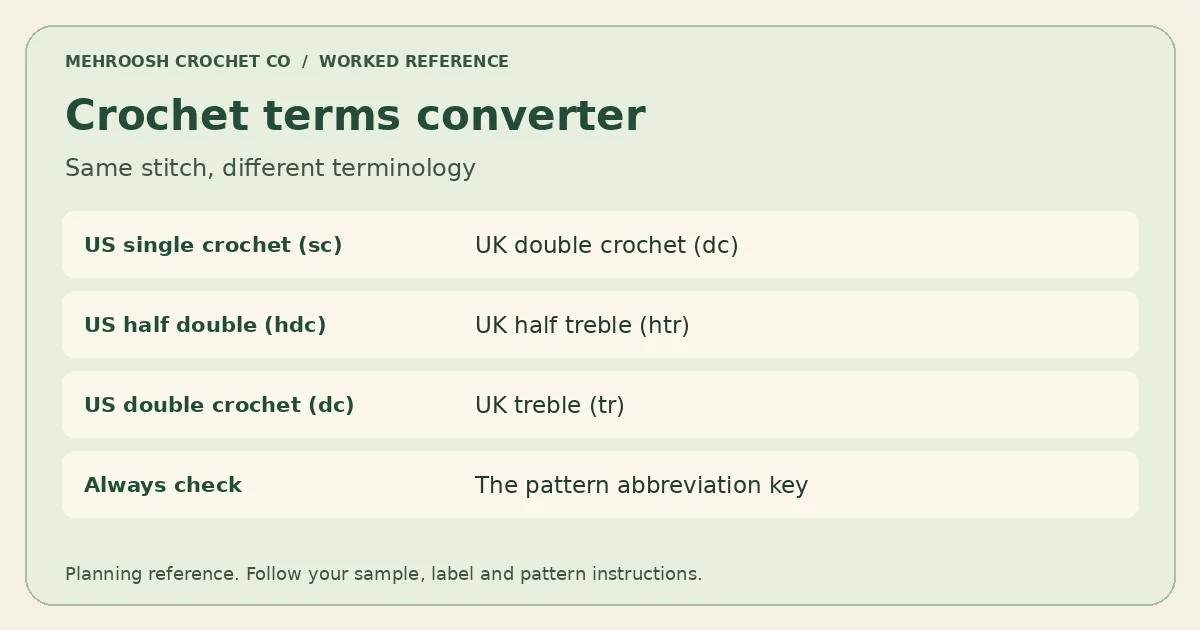
Convert stitch names only, not whole pattern instructions. US single crochet is UK double crochet; these names describe the same stitch. Always check the pattern's own abbreviation key.
| US stitch | US abbreviation | UK stitch | UK abbreviation |
|---|---|---|---|
| Chain | ch | Chain | ch |
| Slip stitch | sl st | Slip stitch | ss |
| Single crochet | sc | Double crochet | dc |
| Half double crochet | hdc | Half treble | htr |
| Double crochet | dc | Treble | tr |
| Treble | tr | Double treble | dtr |
| Double treble | dtr | Triple treble | trtr |
Table of Contents
How to use the crochet terms converter
Start by checking the pattern’s introduction or abbreviation key. Look for an explicit statement that it uses US or UK terms. Choose the matching direction, select the stitch named in the instructions and press Convert. Read both the written name and abbreviation in the result before returning to the pattern.
When you change direction, the stitch selector uses the names from the newly selected source system. Choose the intended stitch again rather than assuming the previous label still applies. The reference chart beneath the tool lets you compare the common names without making a separate conversion for every line.
The crochet terms converter example to remember
US single crochet, abbreviated sc, is called double crochet, abbreviated dc, in UK terminology. These are two names for the same stitch. UK double crochet does not ask you to make US double crochet. A pattern’s terminology statement is therefore more useful than the familiar appearance of the letters dc.
US half double crochet is UK half treble. US double crochet is UK treble, while US treble is UK double treble. The crochet terms converter also includes chain, slip stitch and US double treble with its UK triple-treble name. The chart follows the Craft Yarn Council’s US and UK abbreviation reference.
Names change; the instructions still matter
Do not change stitch counts, repeat brackets or the number of rows simply because you converted a stitch name. For a correctly identified equivalent, the stitch itself stays the same. Read the complete instruction, including where to insert the hook and whether to work into a stitch, chain space or post.
A special abbreviation may have a designer-specific meaning. Clusters, bobbles, shells and other grouped stitches can be defined differently between patterns. If an abbreviation is not in this tool, read its definition instead of guessing from a similar name. Our crochet pattern-reading guide explains repeats, brackets and instructions alongside stitch names.
Keep a short terminology note with your project
Write the pattern’s source terminology at the top of your notes. If you normally use another system, record the few stitch equivalents that appear in that project. Keep the original instructions available so you can check unusual stitches and turning-chain conventions when needed.
The converter does not translate a complete pattern, inspect an uploaded PDF or infer its country from a website address. US and UK naming systems appear in patterns made and sold around the world. Language, spelling or a designer’s location alone is not a reliable replacement for the pattern’s own key.
Crochet terms converter questions
Why does dc seem to produce the wrong fabric? Check the terminology first. In US terms dc names a taller stitch than UK dc. If the pattern’s key is unclear, compare its written stitch procedure and ask the designer before continuing with a large piece.
Are slip-stitch abbreviations always identical? You may see sl st or ss depending on the source. The table shows common forms, while the individual pattern remains the reference for its chosen abbreviation. Chain is commonly ch in both systems.
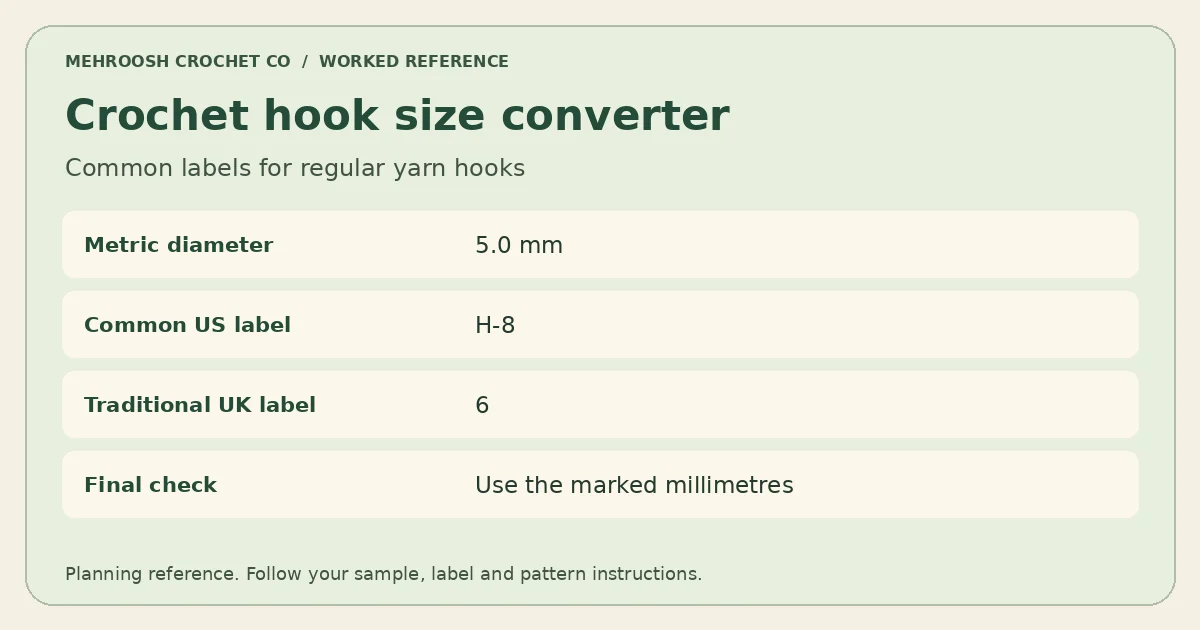
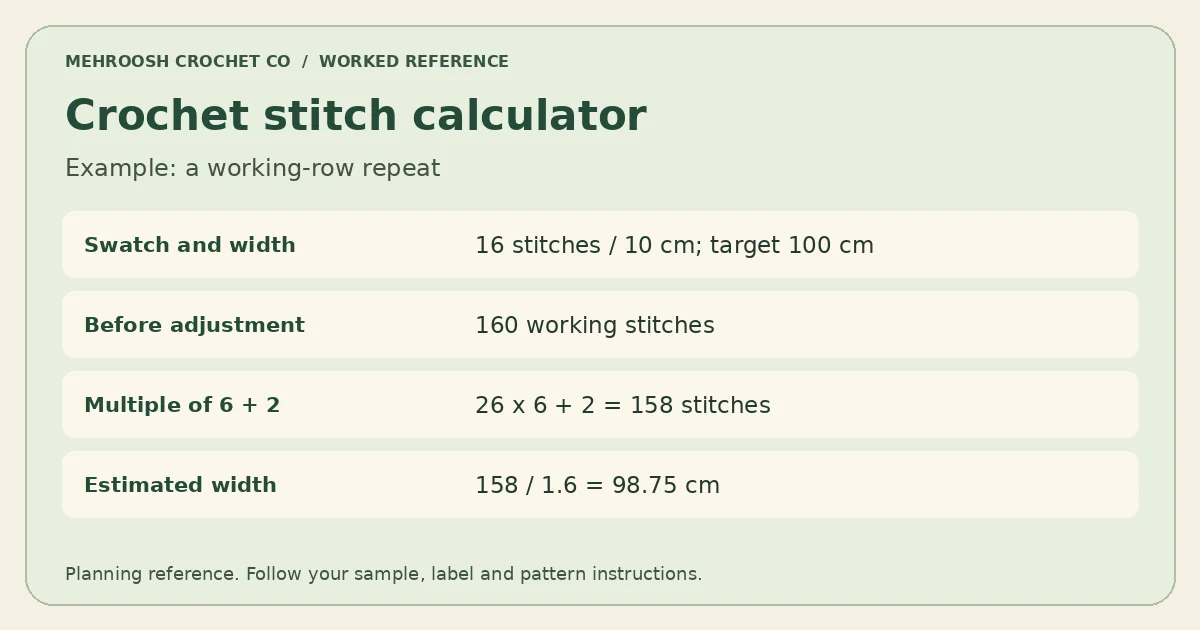
Does conversion fix gauge? No. Even when you understand every stitch, your yarn, hook and tension affect the fabric. Practice with our beginner crochet guide, measure your swatch and check working stitches with the Crochet Stitch Calculator. Browse the free crochet tools hub for the related hook-size reference.
Three checks when using the crochet terms converter
1. Confirm the source system
Start with the pattern’s own terminology statement. A designer based in one country may publish instructions using another naming system, so an address, spelling style or shop location is not enough. When you cannot find a statement, read the stitch definitions and ask the designer before working a large section.
The crochet terms converter needs you to choose the source system correctly. Selecting US to UK when the original instruction already uses UK names changes the meaning in the wrong direction. Write the selected direction at the top of a working note so you do not switch systems halfway through the project.
2. Keep the numbers and locations
Consider an instruction in US terms that asks for three double crochet stitches in the next space. In UK terms the equivalent stitch name is treble, but the instruction still asks for three stitches in that same space. Changing the name does not spread those stitches across three separate positions or alter the repeat count.
Use the crochet terms converter for the stitch name, then copy location words and quantities carefully. The words each, same, next and space still matter. A correct stitch equivalent with a changed location produces a different arrangement, even when the total number of stitches happens to match.
3. Preserve special definitions
Designer-defined shells, clusters and textured stitches require their written procedures. Two patterns can use a similar label while specifying a different number of stitches or a different joining method. An unfamiliar abbreviation should lead you to the pattern’s key, not to the closest familiar word.
The crochet terms converter is a common-stitch reference rather than a complete pattern translator. Keep the original pattern accessible alongside your notes, including turning-chain conventions and any chart legend. After establishing the stitch system, make and measure the required sample with your own materials. Knowing the equivalent name does not guarantee matching gauge, fit or yarn use.
 Crochet Hook Size Converter
 Crochet Stitch Calculator
 Crochet Row Counter