Use this free crochet pricing calculator to build a selling-price estimate from the costs of making your item. Include materials, time and allocated overhead, then choose a profit markup and enter any selling fees. The breakdown helps you see what the suggested price covers before comparing it with your market.
Mehroosh Crochet Co · Free crochet tools
Estimate a selling price from materials, labour, overhead, markup and selling fees.
Your estimate
Enter your details, then select Calculate.
A planning estimate, not a market price or tax calculation. Enter the actual fee rates applicable to your sale; platform fees are not assumed.
How this crochet pricing calculator works
Base cost is materials plus labour plus allocated overhead. Markup is added to that base cost; it is not a profit margin percentage. The tool then adjusts for a percentage selling fee and a fixed fee: (base × (1 + markup / 100) + fixed fee) ÷ (1 − fee / 100). Compare the result with your market and include any taxes or shipping separately.
Need help planning yarn costs? Use our Yarn Cost Calculator, then include the relevant material cost in your pricing estimate. Explore all crochet tools or browse free patterns.
Table of Contents
How to use the crochet pricing calculator
Choose the currency in which you record your costs. Enter materials and packaging, working hours and an hourly labour rate. Add the overhead amount you want this item to carry. Next, enter the profit markup, percentage selling fee and fixed fee applicable to the sale, then select Calculate.
Use costs for the item or batch represented by your inputs. If you make three pieces together, either enter the whole batch and interpret the result as a batch price or divide the shared costs and time consistently before calculating one piece. Mixing batch labour with single-item materials produces a misleading estimate.
A crochet pricing calculator example: 90 dollars
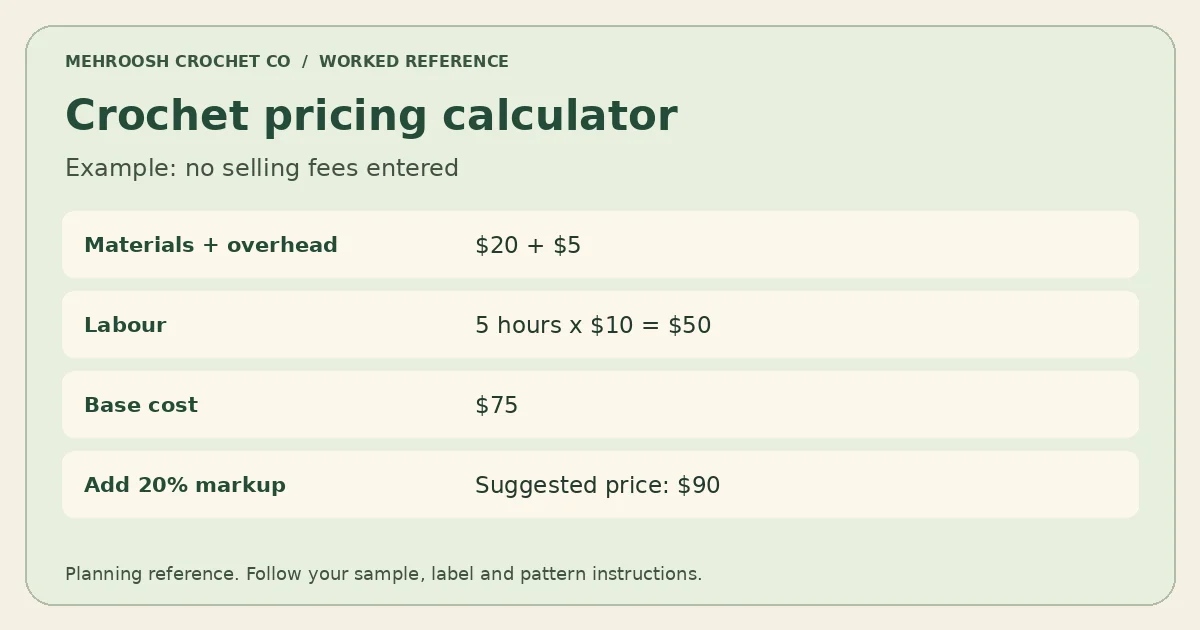
Consider materials and packaging of 20 dollars, five working hours at 10 dollars per hour, and allocated overhead of 5 dollars. Labour is 50 dollars and base cost is 20 + 50 + 5 = 75 dollars. A twenty percent markup adds 15 dollars. With no selling fees entered, the estimated price is 90 dollars.
The crochet pricing calculator labels that 15 dollars as profit above the entered base cost. Labour has already been included as a cost. If you forgot a cost, the displayed surplus would not necessarily cover it. Treat the breakdown as a check on your inputs, rather than proof that every business expense is represented.
Markup is different from profit margin
A twenty percent markup on a cost of 75 dollars gives 90 dollars. The 15 dollar surplus is one sixth of the selling price, not twenty percent of it. This tool asks for markup on cost. Do not enter a desired margin percentage as if it were the same measure.
When you enter selling fees, the formula is: (base cost × (1 + markup ÷ 100) + fixed fee) ÷ (1 − percentage fee ÷ 100). For example, a 75 dollar base, twenty percent markup, ten percent fee and one dollar fixed fee gives about 101.11 dollars before any currency-rounding difference. The tool does not assume a particular platform’s fees.
Record the costs that belong to this sale
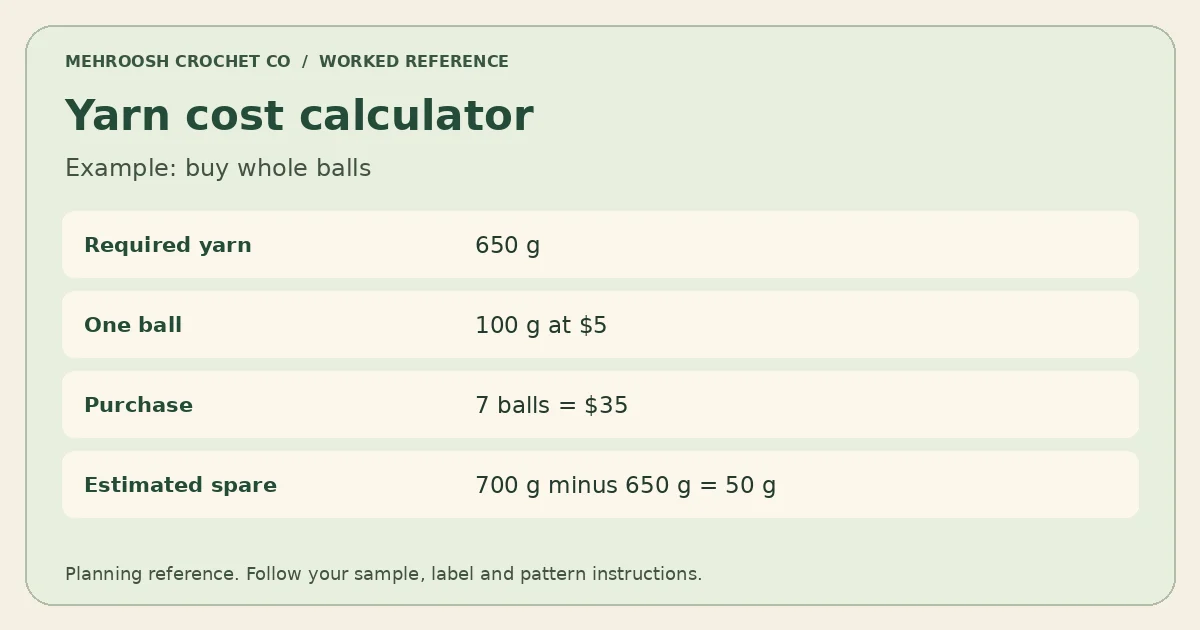
Materials may include yarn, buttons, lining, stuffing, labels and the packaging you supply. For yarn purchase planning, use the Yarn Cost Calculator. Decide how you allocate leftover materials instead of treating every purchased ball as fully consumed by each item.
Overhead is an amount you choose to allocate, rather than a percentage invented by the tool. Keep notes explaining it. Enter your actual selling and payment fees after checking the relevant provider. Shipping, discounts and applicable taxes need separate consideration; this calculator does not identify tax obligations or calculate a complete marketplace checkout.
Crochet pricing calculator questions
Does the result guarantee buyers will pay this price? No. It shows an estimate based on your inputs. Compare the product, finish, audience and selling conditions with your own market. You may need to change the design or production process if the price does not support your costs.
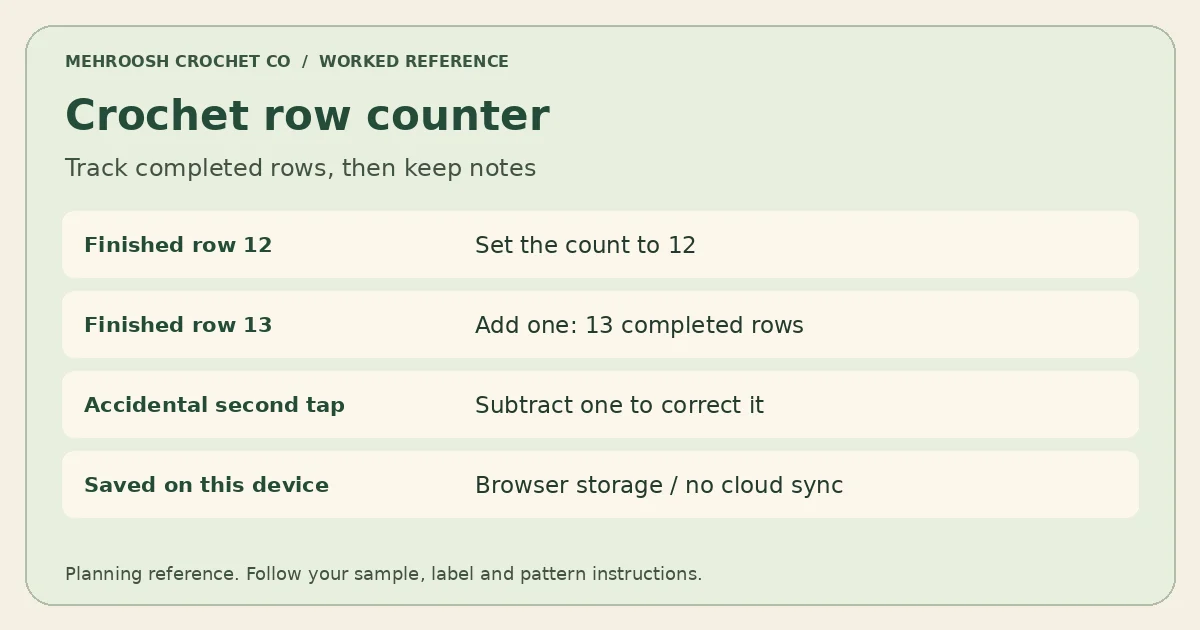
How can I make time estimates more useful? Record the time actually spent on similar work, including finishing tasks you intend to charge for. Keep your pattern notes and row progress with the Crochet Row Counter, while recording working hours separately.
Can I use this for pattern PDFs? Some inputs may be relevant, but repeated digital sales and development costs require their own allocation. Do not treat a physical-item estimate as a complete digital-product business model. For consistent stitch wording in your instructions, consult the Craft Yarn Council abbreviation reference. Return to our free crochet tools for gauge, yarn and size planning.
Three checks for a crochet pricing calculator estimate
1. Separate making time from elapsed time
A project can stay in your basket for a week while requiring only a few hours of active work. Record the working time you intend to include, such as stitching, sewing parts together and finishing ends. Write down interruptions separately. Consistent records from comparable items are more useful than estimating labour from the number of days between starting and finishing.
Enter those hours and your chosen hourly rate in the crochet pricing calculator. The rate is your decision; the website does not select a local wage or promise a particular income. If you sell different products, keep a separate time record for each design and size instead of assigning every item the same labour cost.
2. Keep one-item and batch costs consistent
Suppose three matching pieces use materials costing 18 in total and take six working hours together. To estimate one piece, a simple equal allocation would use materials of 6 and two working hours. This only suits genuinely comparable pieces. If one item needs more work or supplies, record that difference rather than dividing every amount equally.
The crochet pricing calculator should receive either the complete batch figures or a consistent single-item allocation. Note what you entered beside the result. Shared packaging, labels and setup time also need an allocation if you want the estimate to represent them. Do not count the whole supply purchase against every piece in the same batch.
3. Compare the breakdown before choosing a price
Look at materials, labour, overhead and entered fees individually. A low suggested price may come from a missing cost or a short time estimate. Increasing the markup can hide that error without explaining it. Correct the underlying entry first, then compare alternative markups using the same cost base.
Keep a dated copy of the crochet pricing calculator inputs so you can revisit the estimate when supplies or selling conditions change. Check the actual provider’s fees separately and use the relevant figures for your sale. A calculator result is a planning figure; your final pricing decision also depends on the product, audience and costs you have chosen to include.
 Yarn Cost Calculator
 Yarn Quantity Calculator
 Crochet Row Counter