Use this free yarn quantity calculator to plan yarn for a rectangular crochet piece from a sample you have measured and weighed. Enter the swatch dimensions, fabric weight and intended project size. The result estimates total weight, yarn length and whole balls, with the spare-yarn percentage you choose.
Mehroosh Crochet Co · Free crochet tools
Estimate yarn weight and length from a measured, weighed swatch and project dimensions.
Your estimate
Enter your details, then select Calculate.
Area-based estimate only. Use the same yarn, hook, stitch pattern and finishing for the sample and project. Borders, tassels and construction details need an additional allowance.
How this yarn quantity calculator works
The tool divides swatch weight by swatch area, scales it to project area, and adds your chosen allowance. Yarn length is calculated using the length-to-weight ratio on the yarn label. Different stitch textures use different amounts, so a single-crochet sample should not be used to estimate a lace or shell project. Whole-ball rounding is included.
For help with gauge, visit our stitch-counting guide. Explore all crochet tools or browse free patterns.
Free Blanket Yarn Planning Checklist
Keep your blanket size, swatch, colour quantities and finishing allowance together with this free one-page printable checklist.
Download Free Blanket Planning Checklist (PDF)1 page · 63 KB · No signup required. Yarn quantities remain planning estimates.
Table of Contents
How to use the yarn quantity calculator
Make a sample with the yarn, hook and stitch pattern planned for your project. Finish it as the pattern directs, then lay it flat without stretching. Measure its width and height, and weigh the same piece of fabric. Exclude loose yarn and long tails that do not represent the measured fabric.
Choose centimeters or inches for the fabric dimensions. Enter the sample’s width, height and weight in grams, followed by the project’s main width and length. Choose an extra allowance, then enter the ball weight and length from the yarn label. Select metres or yards for that labelled length and press Calculate.
A yarn quantity calculator example: 660 grams
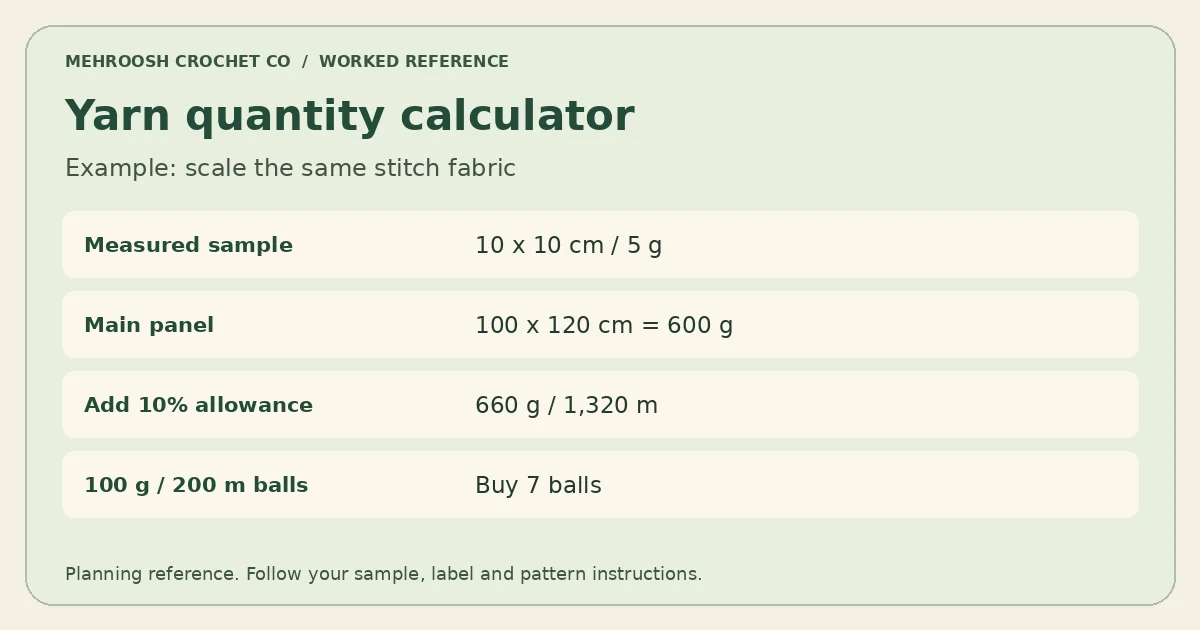
Take a 10 cm by 10 cm sample weighing 5 g. Its area is 100 square centimetres. A 100 cm by 120 cm panel has an area of 12,000 square centimetres, which is 120 times the sample area. The initial fabric estimate is therefore 5 × 120 = 600 g.
With a ten percent allowance, the yarn quantity calculator estimates 660 g. If the yarn label says 100 g contains 200 metres, that is an estimated 1,320 metres. Buying whole 100 g balls means seven balls, giving 700 g and 1,400 labelled metres. The purchase quantity is larger than the fabric estimate because you cannot buy 6.6 whole balls.
Match the sample to the finished fabric
A sample in a dense stitch should not estimate a project in open lace, and an open sample should not estimate a heavily textured blanket. The calculation assumes the same yarn use per unit of fabric area. A different hook, tension, stitch pattern or finishing method can change that relationship.
Use a scale that can measure your sample reliably. A tiny sample near the scale’s resolution gives a weak basis for a large project estimate. Consider making a larger sample, then measure and weigh it consistently. The Craft Yarn Council’s gauge guidance explains why your own fabric sample matters even when you use the suggested hook size.
Allow for the parts the rectangle does not describe
The area model does not design shaping, sleeves, motifs or three-dimensional pieces. Borders, fringe, tassels, seams and long joining tails may need extra yarn. Choose an allowance suited to the project rather than treating the default percentage as a universal rule. Check the designer’s stated yardage as another reference when you have a complete pattern.
For a striped panel, estimate the fabric area assigned to each yarn and calculate each separately. Different colours may be sold at different ball lengths or weights. Round each colour to its own whole balls, and check dye-lot availability before buying the full project supply.
Yarn quantity calculator questions
Does switching cm to inches change the estimate? Switching the dimension unit converts the physical measurements already entered. It should describe the same piece. The yarn length unit is separate and comes from your ball label; read the units beside the result.
Can I get the exact amount for my project? No. This is a planning estimate based on the sample and assumptions you provide. Check your yarn use while working and leave room for finishing details.
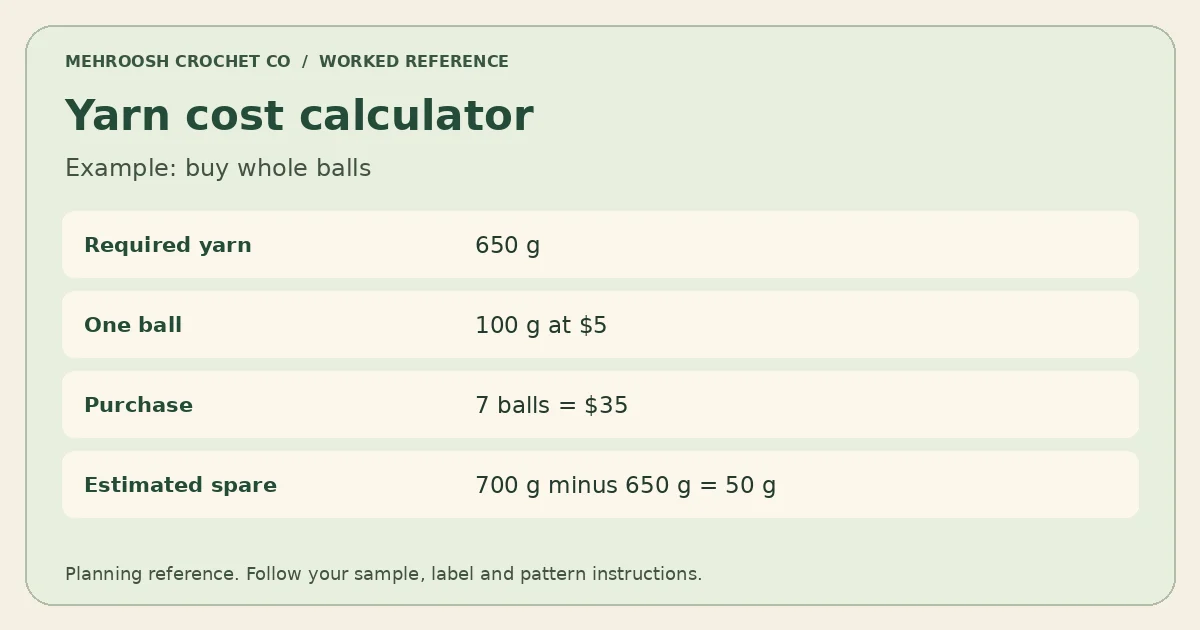
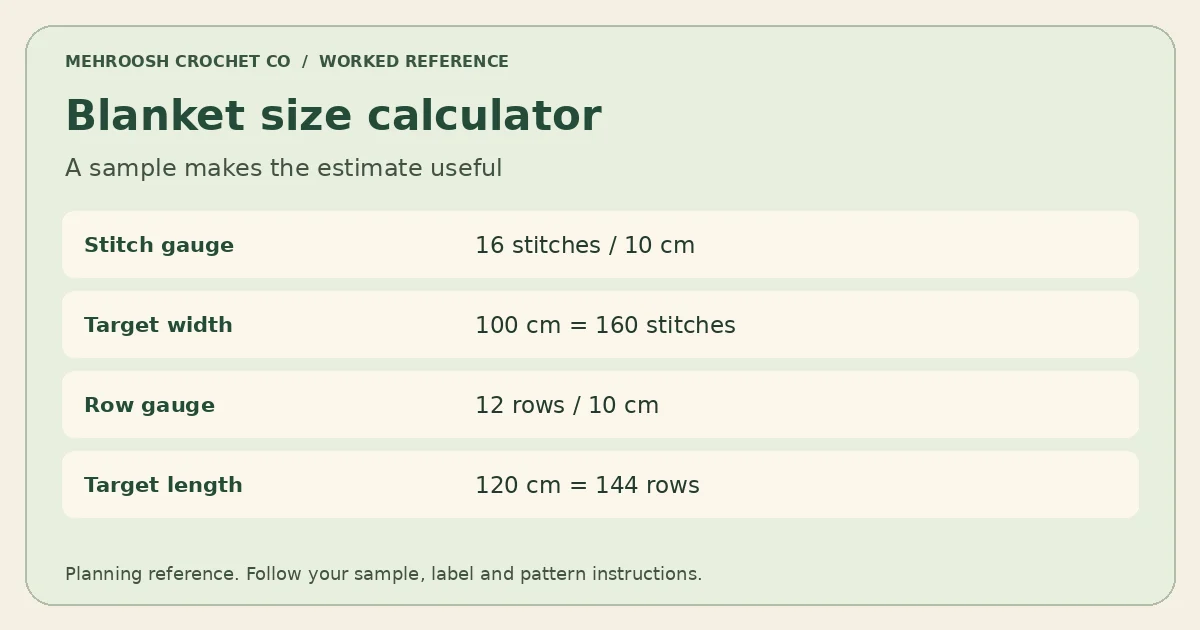
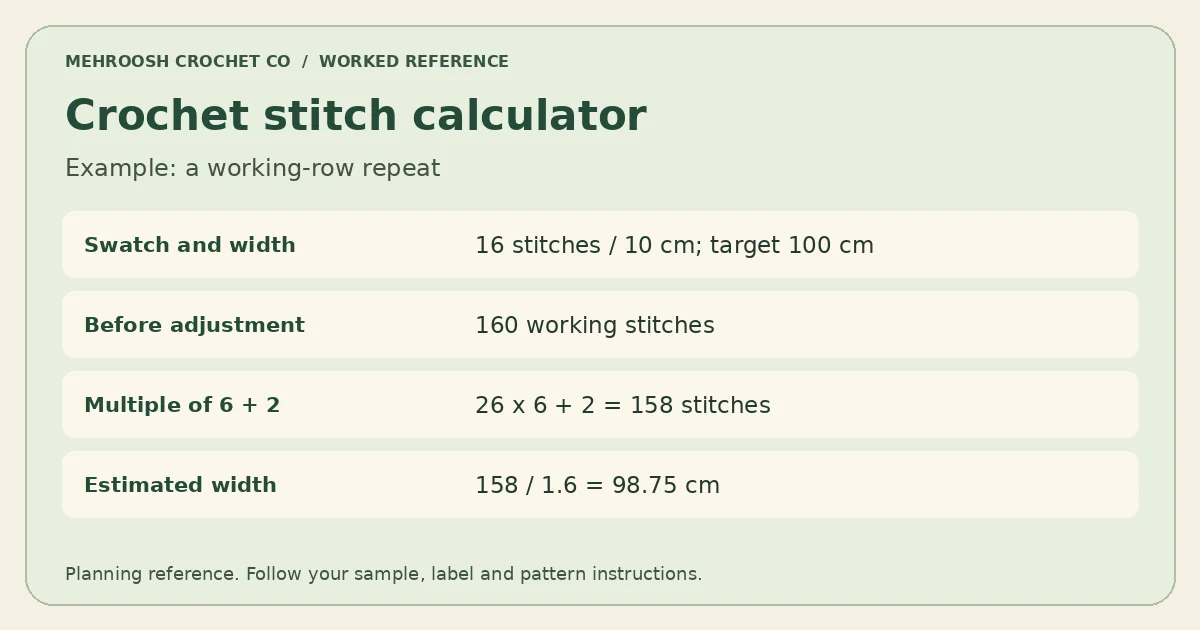
How do I estimate the budget next? Take the whole-ball quantity or yarn requirement to the Yarn Cost Calculator. For stitch and row planning, use the Blanket Size Calculator. Our stitch-counting guide and free crochet tools hub provide related help.
Three checks for a yarn quantity calculator estimate
1. Match the measured area and weight
If you measure the whole swatch, weigh that same piece of fabric after excluding loose yarn that does not represent its area. If a broad border is included in the weight but excluded from the dimensions, the calculated yarn use per unit area will be too high. Keep the measurement method consistent and note what was included.
The yarn quantity calculator scales the relationship between sample area and sample weight. For example, a twenty-centimetre square weighing twenty grams has an area of four hundred square centimetres. A panel measuring eighty by one hundred centimetres has twenty times that area, giving an initial fabric estimate of four hundred grams before your chosen allowance.
2. Round colours independently
A striped project may need different amounts of two yarns. Assign the intended fabric area to each colour and estimate them separately when their yarn use or label quantity differs. A spare ball of one shade cannot automatically replace a missing amount of the contrast colour without changing the design.
Use the yarn quantity calculator with the label that belongs to each actual yarn. Record both weight and length information where available. If one yarn comes in a different ball size, round its estimate using that ball’s quantity rather than copying the number of balls from another colour.
3. Revisit the estimate during the project
After working a representative section, compare the yarn used and fabric produced with your sample-based plan. Keep border yarn and other separate components out of that comparison unless they were included in the original model. A noticeable difference is a reason to check the assumptions while there is still time to adjust the purchase plan.
The yarn quantity calculator does not measure tension changes, count finished rows or detect an added border. Those observations come from your work. Keep a note of the original sample, allowance and result alongside actual use. If you recalculate, identify which measurement changed so you can distinguish a revised estimate from additional yarn reserved for finishing.
 Yarn Cost Calculator
 Blanket Size Calculator
 Crochet Stitch Calculator