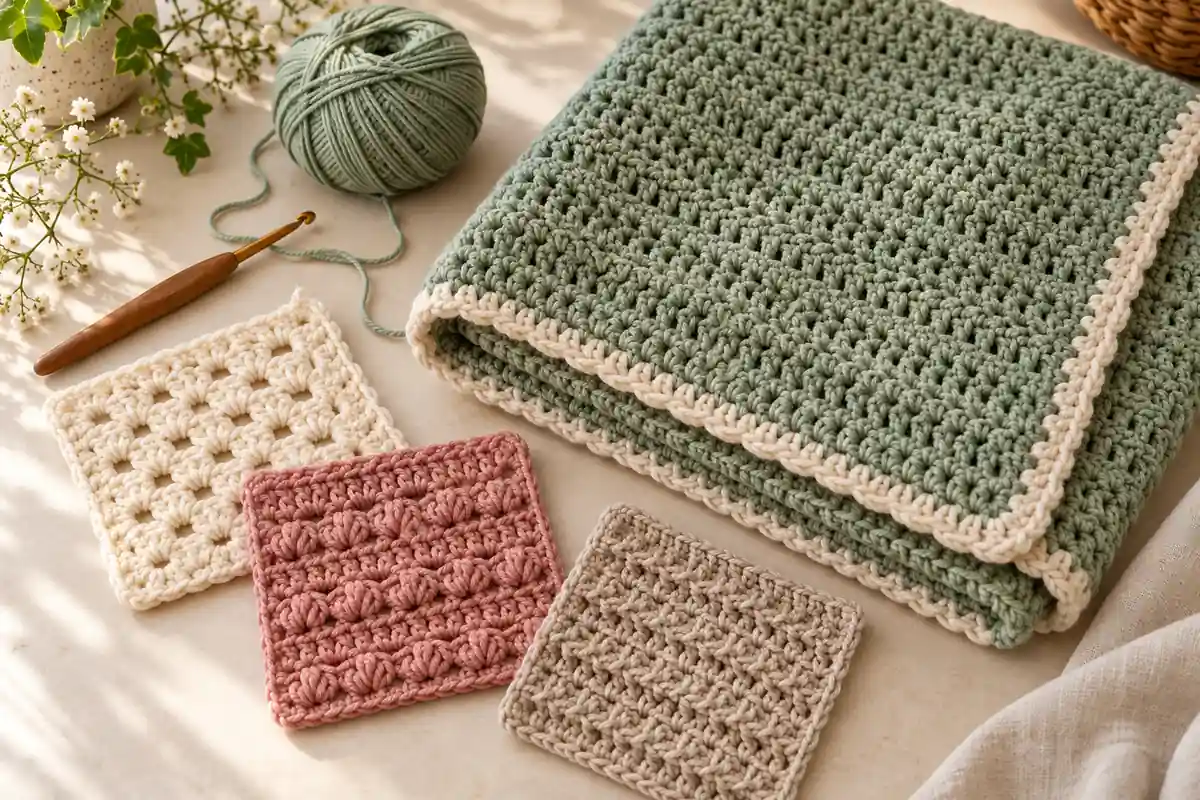
Half double crochet is a useful starting point for a plain blanket. Double crochet builds taller rows, moss stitch gives a small woven texture, and granny stripe creates an open pattern of grouped stitches. Shell and waffle stitches offer more surface detail once you are comfortable following repeats.
Choosing crochet stitches for blankets starts with the fabric you want to make. Hold a sample, bend it and look through it towards the light. A stitch can look beautiful in a close-up photo yet feel too firm, too open or too heavy across a full throw.
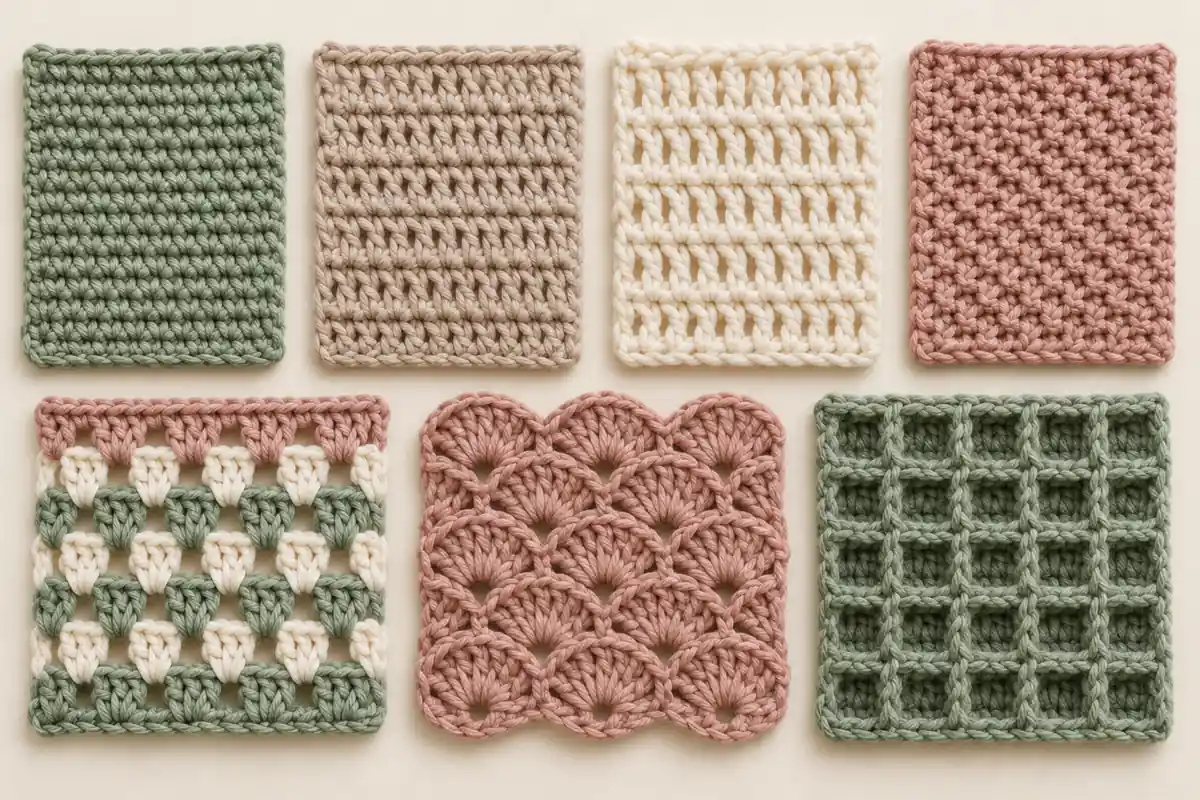
These seven crochet stitches for blankets cover simple rows, small textures and raised patterns. The descriptions explain how each fabric is formed and what to check before committing to a blanket.
Terminology: This article uses US crochet terms. US single crochet is UK double crochet; US half double crochet is UK half treble; US double crochet is UK treble.
Compare Crochet Stitches for Blankets
Use this table to compare crochet stitches for blankets and narrow your choice. These are general fabric descriptions, not results from a controlled speed or yarn-use test. Yarn, hook size and tension can change the finished sample.
| Stitch | Main skills | Typical appearance | What to check |
|---|---|---|---|
| Single crochet | Chains and single crochet | Compact rows with small stitch tops | Whether the fabric bends comfortably |
| Half double crochet | Yarn over and pull through three loops | Plain fabric with a subtle horizontal texture | Foundation tension and row edges |
| Double crochet | Pull through two loops twice | Taller stitches with visible spaces between posts | Turning-chain treatment |
| Moss stitch | Single crochet and chain spaces | Small woven-looking texture | Working into spaces rather than stitch tops |
| Granny stripe | Groups of double crochet | Repeating clusters with open gaps | Edge groups and cluster placement |
| Shell stitch | Several stitches in one position | Fans or scallops | Skipped stitches and row-end instructions |
| Waffle stitch | Double crochet and front-post stitches | Raised lines forming recessed boxes | Post placement and alternating rows |
If chains and row edges still feel unfamiliar, work through our beginner crochet lesson before starting a large piece.
1. Single Crochet Stitches for Blankets
Among crochet stitches for blankets, single crochet gives you one working position after another. There are no clusters to separate and no planned chain spaces in a plain row.
To form the stitch, insert the hook into the required position, yarn over and pull up a loop. Yarn over again and draw through both loops on the hook.
Its short rows make progress easy to inspect. You can follow the upper edge, mark both ends and check whether the stitch total stays steady.
A tightly worked sample may feel firm. Before choosing it for a large blanket, let the sample rest over your hand. If it stands away from your fingers instead of folding around them, try adjusting the hook size and make another sample.
Practice point: Use removable markers in the first and last stitches. Move them into the new row as you work.
2. Half Double Crochet Stitches for Blankets
Half double crochet adds a yarn over before the hook enters the fabric. Pull up a loop, then yarn over and draw through all three loops on the hook.
The result is taller than single crochet, with a small horizontal texture that becomes clearer across several rows.
For someone choosing easy crochet stitches for blankets, half double crochet offers a short stitch sequence without a complicated repeating pattern. It also leaves room for simple colour bands if you want variety without learning a new texture.
Watch the bottom edge while sampling. A tight starting chain can pull the first row into a curve even when the later stitches are relaxed.
Check the pattern notes: Some designers count the beginning chain as a stitch; others exclude it. Keep that choice consistent when placing the first and last stitches.
Lion Brand’s crochet video library includes demonstrations of half double crochet and the other basic stitches.
3. Double Crochet Stitches for Blankets
A double crochet begins with a yarn over. Insert the hook, pull up a loop, then complete the stitch by pulling through two loops twice.
The taller posts create a different fabric from short single crochet rows. Spaces between neighbouring posts are often more noticeable, particularly with a relaxed tension.
When comparing crochet stitches for blankets, double crochet can suit a throw where you want visible stitch definition and an uncomplicated row repeat. Taller rows add height with fewer completed rows, though your working pace still affects the time needed.
The turning chain deserves attention. When a beginning chain counts as the first double crochet, it occupies one place in the total. In a plain row with no shaping, the first full double crochet usually goes into the next stitch, and the return row finishes in the top of the counted chain.
Read the specific pattern before starting. Our guide to reading crochet patterns explains how notes and stitch counts work together.
4. Moss Stitch: Small Texture From Simple Moves
Moss stitch combines single crochet with chain-one spaces. In established rows, the single crochet stitches are worked into the spaces left by the previous row.
That change in insertion point produces a small, woven-looking pattern. Yarnspirations uses the same single-crochet-and-chain combination in its moss stitch blanket pattern.
Solid yarn lets the texture stand out. Changing colours can make the small interlocking shapes more visible, but frequent changes also leave more ends to secure.
When practising, find the chain space before inserting the hook. Working into a single crochet top instead can interrupt the pattern.
Moss stitch instructions vary at the edges. Use one complete tutorial for the foundation and row ends rather than combining the middle repeat from one pattern with the border stitches from another.
5. Granny Stripe: Groups Instead of Long Plain Rows
Granny stripe uses groups of double crochet worked across rows. In later rows, the groups usually sit in the gaps between the groups below.
Those gaps create an open fabric and give you clear places to insert the hook. Once the pattern is established, checking the number of groups can help you notice a missing section.
At the ends, the instructions may use partial groups to keep the sides straight. Follow those details carefully; making a full group everywhere can change the width.
Granny stripe and granny squares share grouped stitches, but their construction differs. Stripes travel back and forth in rows. Squares grow around corners. Our granny square pattern offers a separate exercise for learning groups and corner spaces.
Before choosing it: Spread the sample over a contrasting surface. Decide whether the size of the openings suits the blanket you have in mind.
6. Shell Stitch: Repeating Fans and Scallops
A shell forms when several stitches share one insertion point. In a common version, a group of double crochet stitches spreads into a fan, with single crochet anchors between neighbouring fans.
“Shell stitch” describes a family of patterns. Shell size, skipped stitches and row ends can differ, so the name alone does not give you a complete repeat.
The shell stitch tutorial from The Stitchin Mommy provides one specific version with written instructions and a sample square.
For your first attempt, complete several shells across a small sample. Check that each new fan and anchor sits in the position required by the previous row.
Shell patterns are worth considering when you want a decorative surface without changing colours often. A plain yarn can make the fan shapes easier to follow.
Keep a note of the repeat and edge instructions beside your work. A missed skip near the beginning can shift the remaining shells.
7. Waffle Stitch: Raised Texture With Post Stitches
Waffle stitch uses ordinary stitches and front-post stitches to create raised lines around recessed areas.
A front-post stitch is worked around the upright body of a stitch below. That is a different insertion point from the two loops at the top.
The texture gives a blanket a pronounced front surface. Turn the sample over as well: both sides should be acceptable for the way you plan to use it.
Waffle stitch is one of the crochet stitches for blankets that requires more attention than a plain row because the placement changes across the repeat. It may also need more yarn than a simpler fabric covering the same area, so plan from a suitable pattern or your own measured sample.
Bella Coco’s waffle stitch tutorial includes written instructions, videos and a terminology switch. Select US terms to match this article and read the correction note before following the video.
Need the stitch movements first? Follow our written half double crochet lesson or double crochet lesson, each with a small practice exercise.
Choosing Crochet Stitches for Blankets: Fabric and Colour
To choose crochet stitches for blankets, start with a stitch whose placement you can recognise reliably. Half double crochet or plain double crochet may be easier to maintain across a long row than a pattern that needs several different actions.
If small texture appeals to you, compare moss stitch with a plain sample. Bend both around your wrist and see which fabric you prefer.
For an open, grouped design, look at granny stripe. Shell stitch gives more shaped detail, while waffle stitch adds raised texture.
Colour can change what you notice. A strongly varied yarn may hide small shells or post-stitch lines. Smooth, plain yarn is useful when learning a repeat because a misplaced stitch is easier to find.
Do not choose from the photograph alone. The feel of your own sample should guide the final decision.
Test Crochet Stitches for Blankets Before Starting
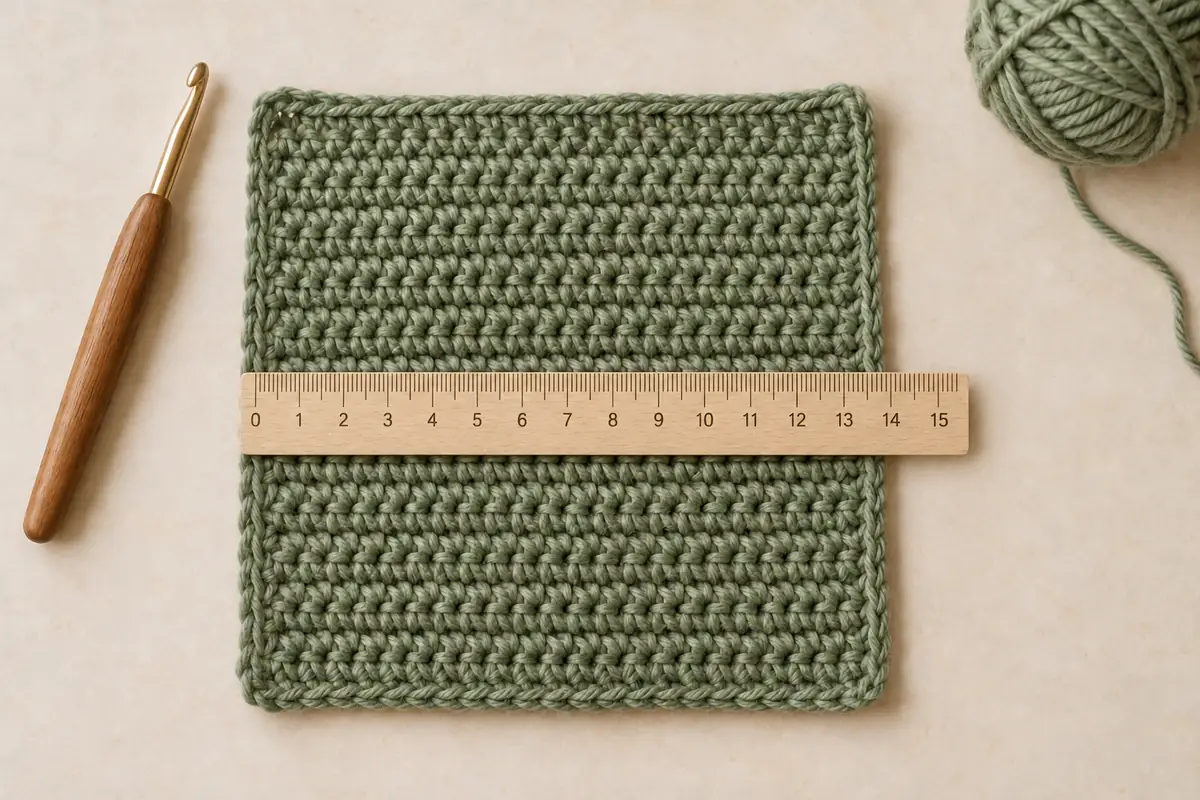
When sampling crochet stitches for blankets, use the yarn and stitch pattern planned for your project. Make it large enough to see several repeats and measure away from the edges.
The Craft Yarn Council’s crochet gauge guidance explains how to compare stitch and row measurements and adjust hook size when the gauge differs from the pattern.
For a useful comparison:
- Make a separate sample for each shortlisted stitch.
- Label each one with the yarn, hook size and stitch name.
- Wash and dry it according to the yarn’s care instructions.
- Check its dimensions, flexibility and appearance once dry.
- Choose the fabric you like, then work out the blanket’s starting count.
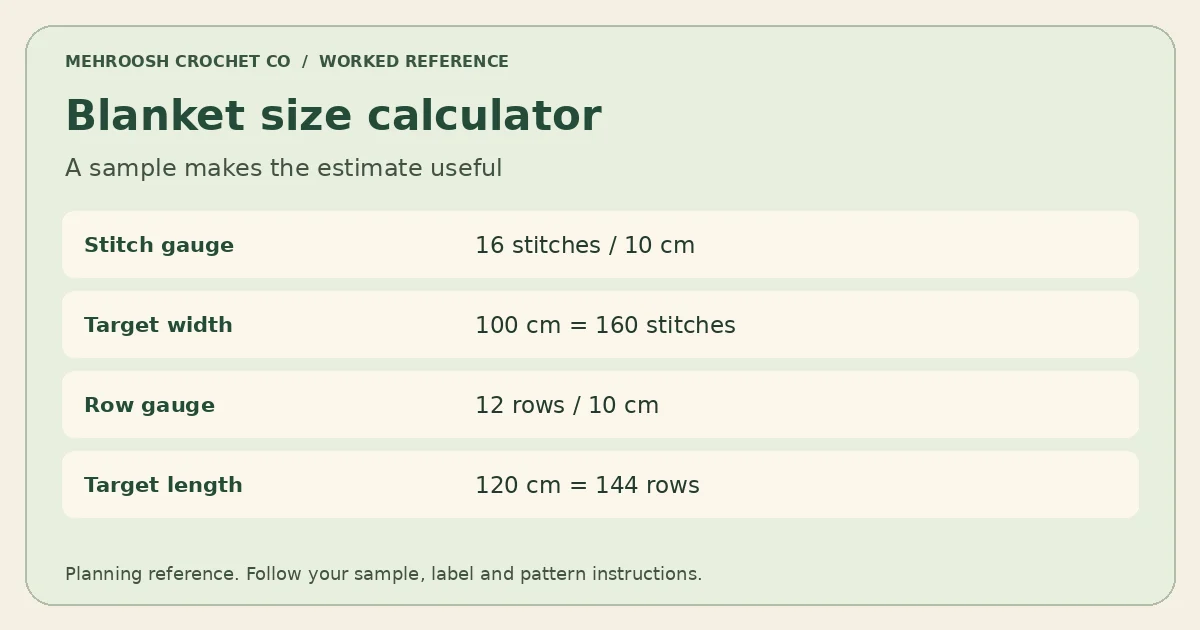
A gauge example shows why the sample matters. If 16 stitches measure 4 inches, the gauge is four stitches per inch. A plain body measuring 40 inches would therefore need about 160 working stitches.
That is not automatically a chain of 160. The foundation must also allow for turning chains, complete repeats and any edge stitches. A border may add width later.
If following a published pattern, use its gauge and sizing instructions.
Once you have measured your swatch, use the crochet stitch calculator to compare working-row counts, or the blanket size calculator to estimate both stitches and rows. Follow your pattern separately for starting chains, borders and shaping.
Crochet Stitches for Blankets: Repeats and Edges
Blankets give small counting mistakes plenty of room to grow. Check early rows before the work becomes long and awkward to undo.
For plain stitches, count the completed stitch tops. For grouped patterns, check the number of groups and the stitches used at both ends. Keep chain spaces separate when the pattern lists them separately.
Our stitch-counting guide shows how to identify stitch tops and use markers at the boundaries.
Resizing also needs care. Suppose a particular pattern requires a foundation of a multiple of six plus two chains. Valid totals include 26, 32 and 38. An arbitrary extra chain would interrupt that repeat.
Use the multiple stated by your chosen pattern. There is no single foundation rule for every shell, granny or waffle variation.
Questions About Crochet Stitches for Blankets
Which crochet stitch makes a blanket fastest?
Plain double crochet and granny stripe are worth sampling if you enjoy taller stitches. Actual speed includes the time spent finding insertion points, checking repeats and correcting mistakes. A familiar stitch may be faster for you than a new one.
Which stitch uses the least yarn?
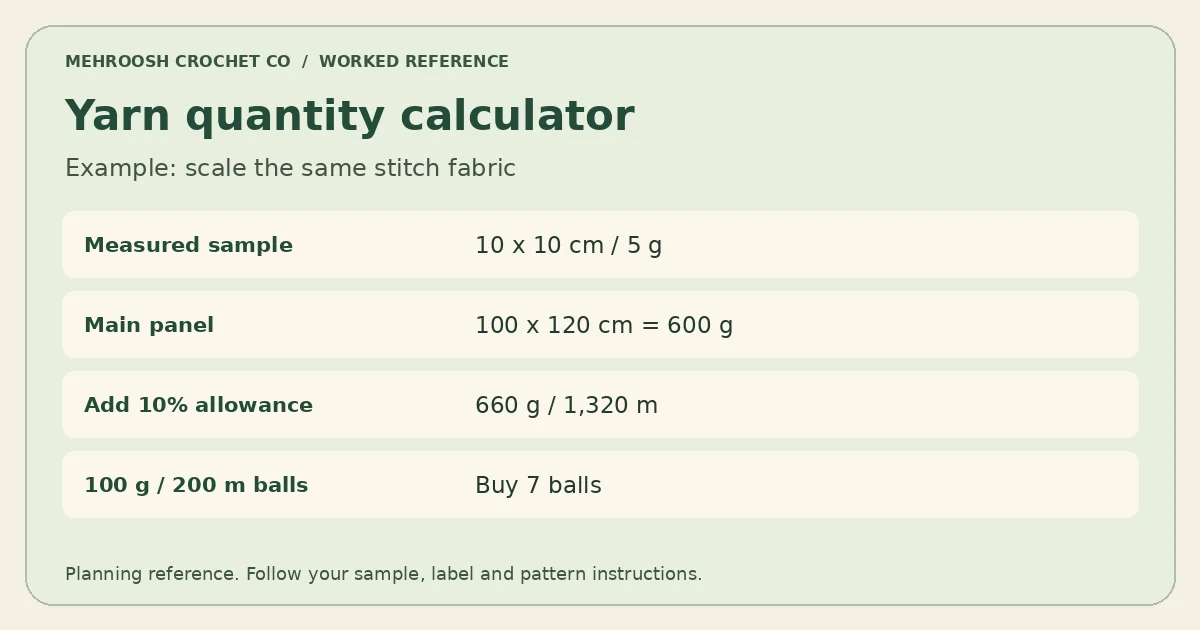
There is no reliable answer from the stitch name alone. Compare samples covering the same finished area in the same yarn. Weighing them can help estimate relative yarn use; comparing equal numbers of stitches will not account for differences in width and height.
Once you have measured and weighed a sample, try the yarn quantity calculator to estimate yarn for your planned blanket dimensions.
Can I combine different crochet stitches in one blanket?
Yes, but equal stitch counts can produce different widths. Sample each section and check how the transition will work. A sampler pattern with planned transitions is easier to follow than changing stitches at random.
Is a larger hook always better for drape?
A larger hook may loosen the fabric, but it can also create openings you do not want. Choose the hook from the sample’s feel and appearance, or match the gauge required by your pattern.
Will a border fix uneven sides?
A border can tidy an edge, but it cannot reliably correct rows that keep gaining or losing stitches. Find and repair the cause before adding the border.
If you plan to sell a finished blanket, the crochet pricing calculator can help you account for materials, working time and entered selling fees. Compare the estimate with your actual costs and market before setting a price.
Try a Free Baby Blanket Pattern
Ready to follow a complete project? Our Sage Meadow baby blanket pattern combines single and double crochet in a lemon peel repeat, with ivory, sage green and dusty rose bands and an ivory border.
Lemon peel is a separate texture from the seven stitches compared above: it alternates single and double crochet across an even stitch count. The pattern includes its own gauge swatch, row counts, colour plan and border instructions.
Read the free written pattern or get the printable PDF. Check its materials and gauge before starting.
Start With the Sample You Want to Keep Making
Choose two crochet stitches for blankets that suit your current skills and make a sample of each. Compare the fabric, check the repeat and decide which one you would be happy to work across many rows.
For another lesson before you begin, browse the Mehroosh Crochet tutorials and practise the skill your chosen stitch needs.
Tools for Your Next Planning Step
Choosing crochet stitches for blankets does not require choosing the most complex pattern. A plain sample that stays consistent can be a better starting point than a texture you cannot yet check confidently.
Compare crochet stitches for blankets using your own sample measurements, then follow the written construction instructions for the project you choose.
 Blanket Size Calculator
 Yarn Quantity Calculator