These free crochet tools help you turn a measured swatch and a project idea into useful planning figures. Choose the task you need below: calculate working stitches, estimate yarn, compare stitch terminology or keep track of completed rows. Each tool explains its assumptions so you can compare the result with your pattern and materials.
Mehroosh Crochet Co · Plan, measure, make
Free crochet calculators and reference tools for your next handmade project. Use a swatch in your chosen yarn and stitch pattern for the most useful estimates.
Crochet Stitch Calculator
Estimate working stitches from swatch gauge, target width and pattern repeats.
Open toolBlanket Size Calculator
Estimate stitches and rows for a rectangular blanket using your own stitch and row gauge.
Open toolYarn Quantity Calculator
Estimate yarn weight and length from a measured, weighed swatch and project dimensions.
Open toolYarn Cost Calculator
Round your yarn requirement to whole balls and estimate the yarn budget.
Open toolCrochet Pricing Calculator
Estimate a selling price from materials, labour, overhead, markup and selling fees.
Open toolUS to UK Crochet Terms Converter
Compare common US and UK stitch names and abbreviations.
Open toolCrochet Row Counter
Track completed rows and save named projects in this browser.
Open toolCrochet Hook Size Converter
Compare millimetres with common US and traditional UK hook labels.
Open toolStart with your swatch
Stitch count, finished size and yarn estimates depend on your own gauge. Match your sample yarn, hook, stitch pattern and finishing to the project. The calculators provide planning estimates; follow your pattern for turning chains, borders and shaping.
Row Counter saves named projects in this browser on this device. Clearing site data or using private browsing may remove progress. Other tools do not save your inputs or send them to the server. No login or paid API is required.
Learn with our crochet tutorials or explore free crochet patterns.
Table of Contents
Which crochet tools should you use first?
Start with the decision you need to make. If you know the panel width but need a working stitch count, open the Stitch Calculator. If you need both width and length for a rectangular blanket, use the Blanket Size Calculator with your stitch and row gauge. Neither result automatically supplies a foundation chain or redesigns shaping.
Next, estimate yarn from a measured and weighed sample. The Yarn Quantity Calculator scales the sample’s fabric weight to the intended area, adds your chosen allowance and rounds the purchase to whole balls. Then enter the shop’s actual ball price in the Yarn Cost Calculator to estimate the yarn budget.
Eight crochet tools and their jobs
The Crochet Pricing Calculator combines materials, working time, allocated overhead, markup and entered selling fees. It provides a cost breakdown for planning a physical item; it does not research market prices or determine tax obligations. Keep a separate record of costs that are outside the estimate.
The US to UK Crochet Terms Converter compares common stitch names in either direction. The Hook Size Converter compares metric diameters with common US and traditional UK labels. The Row Counter tracks completed rows for named projects in your browser. Together with the four gauge, size and yarn calculators, these make eight crochet tools available without a paid API or visitor account.
Prepare a sample before estimating a project
Use the yarn, hook, stitch pattern and finishing method intended for the finished piece. Measure a flat section away from uneven edges and count complete stitches consistently. If you need row estimates, also count rows over a measured height. For yarn estimates, weigh the fabric area you actually measured.
The Craft Yarn Council’s gauge and hook guidance explains why the recommended hook size alone cannot replace a swatch. Our crochet stitch-counting guide can help you identify the stitches in a measured section. Recheck the sample when you change yarn, hook or stitch texture.
A simple planning example
Suppose your swatch has sixteen stitches across ten centimetres and you want a panel one hundred centimetres wide. Before repeat adjustment, the working-row estimate is 160 stitches. If the pattern imposes a multiple of six plus two extra stitches, the closest allowed count is 158 rather than 160. The changed count also changes the estimated width.
This is why the crochet tools show assumptions and measurements alongside results. A rounded number is useful only when you understand what it represents. Check the pattern’s working-row repeat before entering it, and keep foundation-chain instructions separate. If a blanket also needs a row repeat, adjust its row count according to the pattern.
Check results while you work
After the first few rows, measure the actual fabric and compare it with your plan. A large piece may behave differently from a small sample, and finishing can change dimensions. Stop to investigate a substantial difference before buying more supplies or continuing with many rows.
Allow separately for features the chosen calculation does not describe, such as borders, fringe, seams, motifs and garment shaping. For help reading those directions, see our crochet pattern-reading guide. You can also explore crochet tutorials and free crochet patterns when choosing your next project.
Crochet tools and saved progress
The calculators and reference converters run in your browser and do not save their inputs to the website. Row Counter is different: it saves project names and counts locally in this browser on this device. It has no cloud sync. Clearing site data or using private browsing can remove progress, so keep a separate note for an important project.
No estimate guarantees an exact finished size, yarn requirement or selling outcome. Use the appropriate tool as a planning aid, compare its result with your own sample and follow the pattern’s instructions for the final construction.
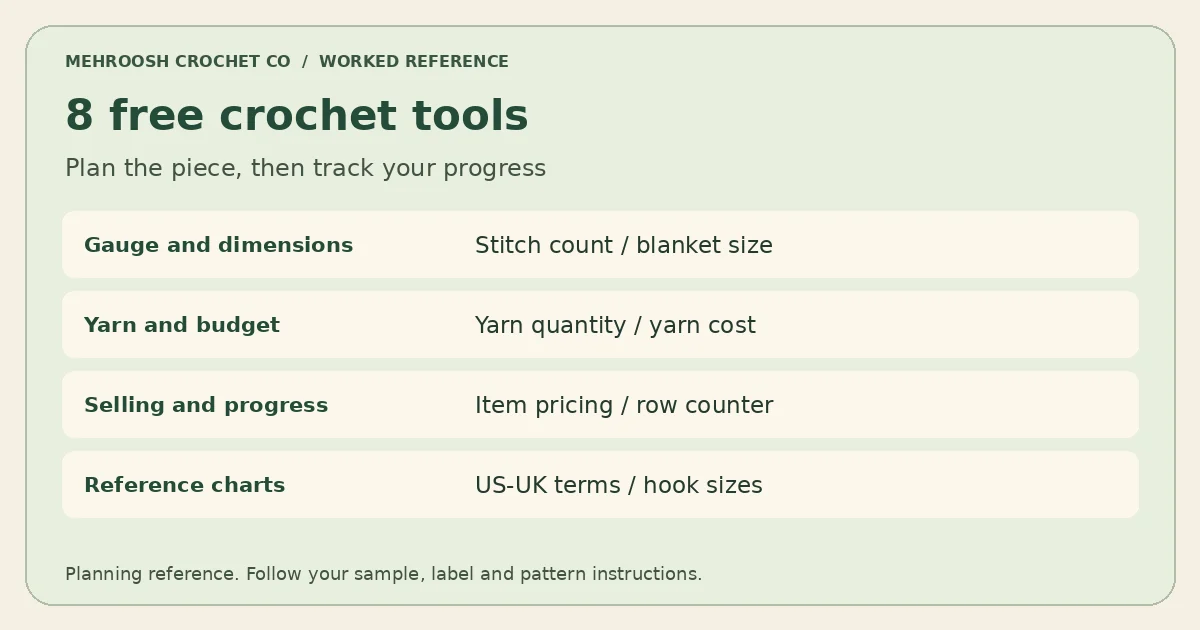
A three-part worksheet for choosing crochet tools
Record what you measured
Begin with the yarn, hook diameter, stitch pattern and finishing method used for your sample. Write the measured width, height, stitch count, row count and fabric weight where relevant. Each figure should describe the same sample or clearly identify a separate measurement. This makes the results easier to reproduce when you resume the project.
The crochet tools use the information you enter; they cannot determine whether a swatch was stretched, weighed with loose yarn or measured in a different stitch. A reliable worksheet therefore begins with your observations, before the calculated stitch, row or ball totals.
Keep the calculations in order
Choose the construction dimensions first, including any separate border allowance. Then compare stitch and row estimates at your sample gauge. After settling the main fabric plan, estimate yarn and round each required colour to its own purchasable balls. Use the actual supplier’s price for the budget rather than treating a reference example as a quotation.
These crochet tools answer related but different questions. A correct stitch count does not establish a yarn price, and a ball estimate does not confirm garment fit. Moving through the decisions in order helps you see which result needs updating when you alter a dimension or substitute a material.
Save the assumptions with the result
A note reading seven balls is incomplete without the yarn label quantity, intended area and allowance. A note reading one hundred and sixty stitches should also identify the gauge, width and repeat rule. Keep those assumptions beside the selected result so a later change can be traced to the correct input.
Use the crochet tools again when a relevant assumption changes, then compare the revised result with the work already completed. Record actual fabric measurements and yarn use during the project. Those observations help you decide whether to continue, rework the start or revise the plan. No single result replaces the designer’s construction instructions or your own check of the fabric.
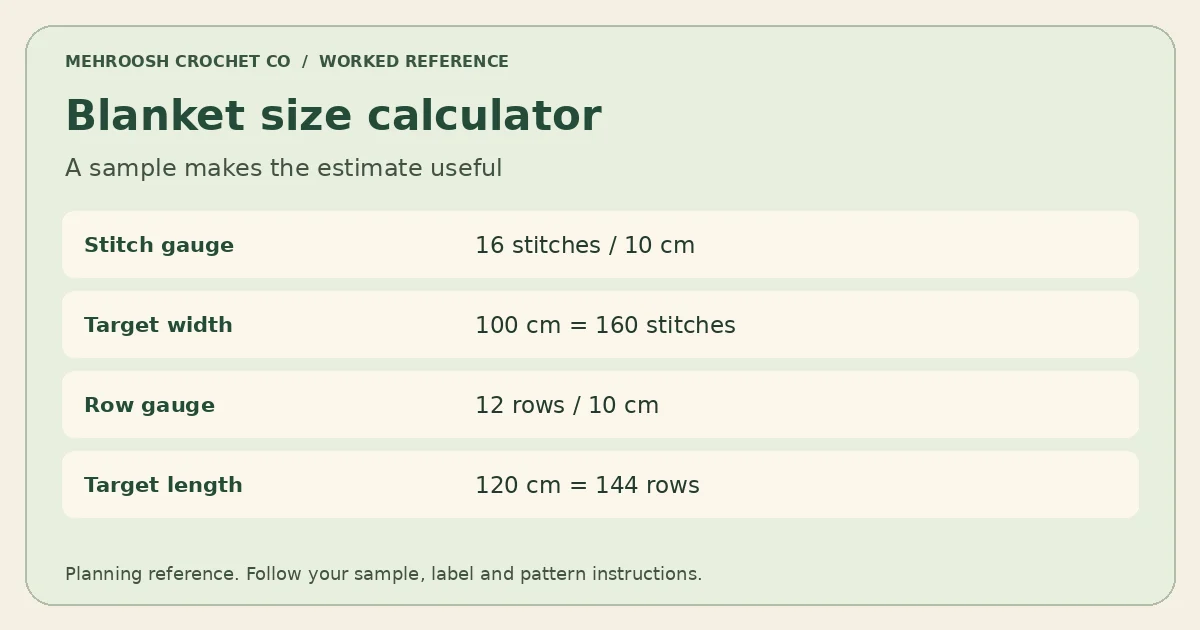 Blanket Size Calculator
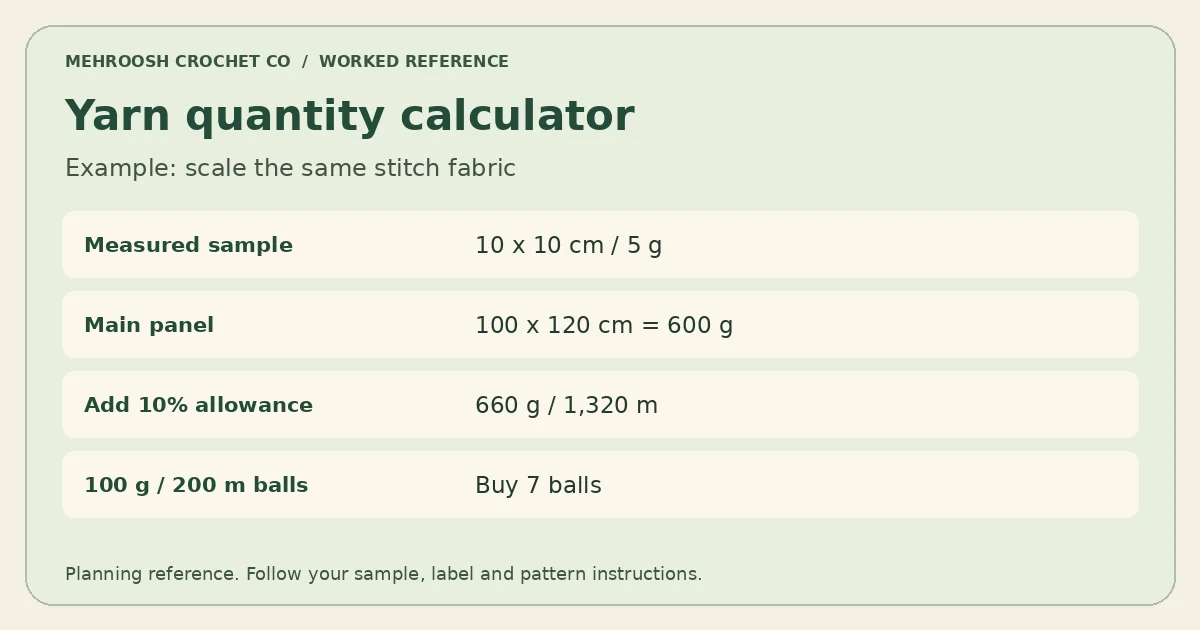 Yarn Quantity Calculator
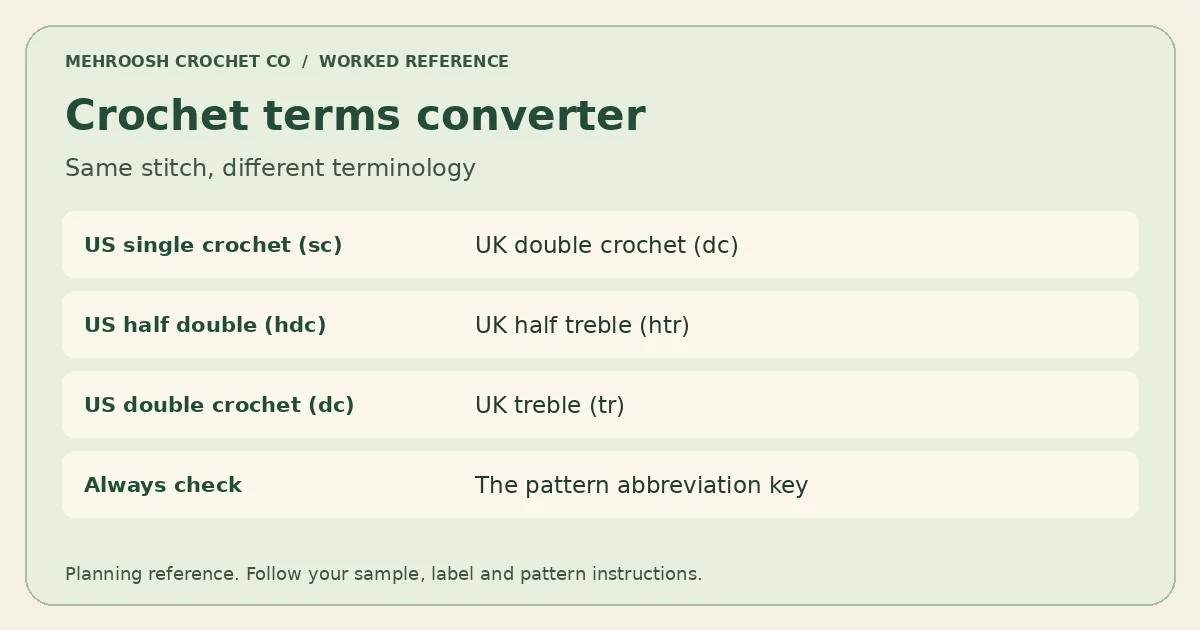 US to UK Crochet Terms Converter